
When the brass band marches through the village in early October, traditional dress comes out of the wardrobe and a magnificent crown of grain stands in front of the church, it’s Erntedank here in the Salzburg region, our harvest thanksgiving. For a family business like ours, where everything revolves around grain, it’s one of the loveliest days of the year. And what could suit it better than a harvest festival bread baked from grain you’ve milled yourself just moments before?
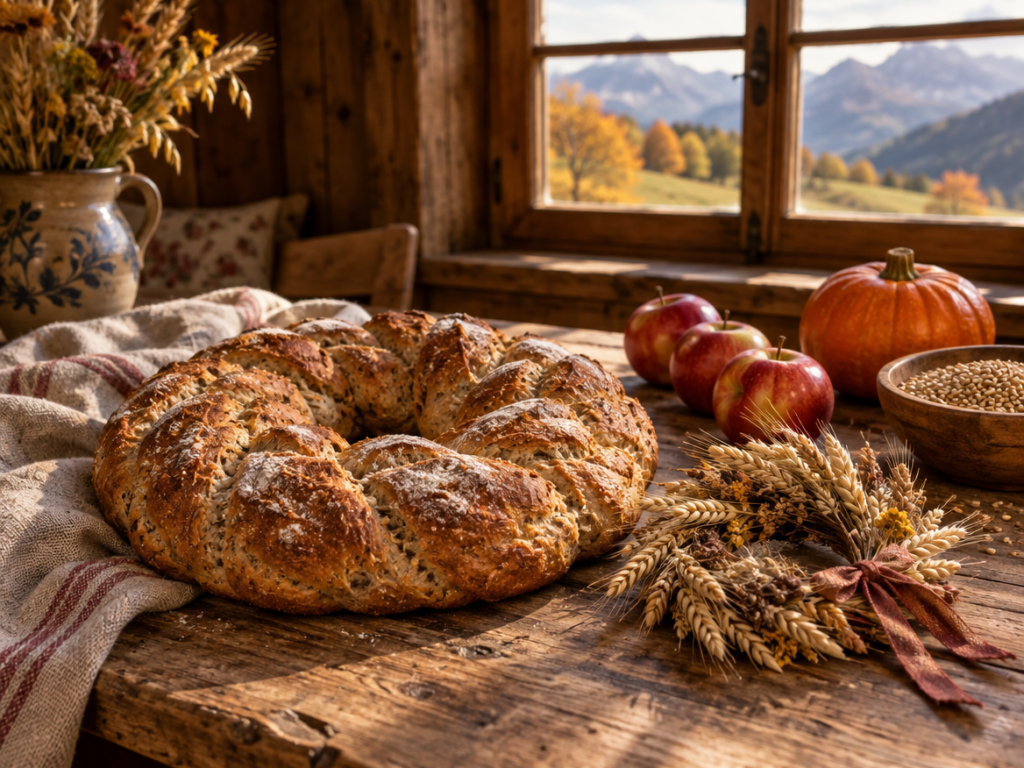
Here we’ll tell you what the festival is about and share our recipe for a braided bread wreath made with freshly milled spelt and rye. It works even if you’ve never braided dough before. Promise.
In many Austrian parishes, Erntedank is celebrated on the first Sunday in October; some celebrate at the end of September. This year the first Sunday in October falls on 4 October. The idea is simple and all the more beautiful for it: the fields are harvested, the grain is safely in, and people say thank you that enough has grown once again.
A good harvest was never something to take for granted. A summer of hail or a wet August could mean a hard winter for a farming family. Perhaps that’s why the festival is still so deeply rooted in the countryside today.
At the heart of many celebrations is the Erntekrone, the harvest crown. It’s bound from ears of wheat, rye, barley and oats and decorated with flowers and ribbons, often by farmers’ wives, the local rural youth group or helpers from the village, in many hours of handwork. During the procession it is carried or brought to church on a decorated cart, accompanied by music, local clubs and people in traditional costume.
During the festive mass, the harvest gifts are blessed: field crops, fruit, vegetables and above all bread. In many places, the blessed bread is shared afterwards or taken home. We especially love this idea of sharing. Bread has always been something you eat together, at the family table, during a break in the fields or after church.
Erntedank celebrates grain just as it comes from the field, and that’s exactly how it goes into your grain mill: as the whole kernel, with germ and bran. Only when you mill it does it become flour. That brings a few lovely benefits:
We shape our bread as a wreath because it reminds us of the harvest crown and looks wonderfully festive on the table. It’s a simple yeast dough, so no sourdough is needed. The rye adds a hearty flavour, while the spelt makes the dough easy to braid.
Let the wreath cool completely on a rack. We know how hard that is when the whole kitchen smells of fresh bread, but the crumb will thank you.
You don’t need a procession to celebrate. Bake your bread on Saturday, and on Sunday add some butter, a good mountain cheese, apples and fresh herbs, then invite your family or neighbours. If you have children, let them help with the braiding. A slightly wonky wreath tastes just as good, and the joy is twice as big.
And when you cut the first slice, maybe take a quiet moment to think of everyone who helped bring that grain to your table. That’s what Erntedank is all about.
With your Salzburg grain mill, you bring the harvest straight into your kitchen and mill exactly as much as you need: for your harvest wreath, your Sunday loaf or the Christmas baking that’s just around the corner. And with the Salzburg flaker, the same grain becomes fresh flakes for your breakfast. We wish you and your family a happy harvest festival and lots of joy baking!